
Gifts That Build Healthy Relationships With Food
Gifts That Build Healthy Relationships With Food
By Megan Wallace, RD | Pediatric & Family Nutrition
December is full of cookies, cocoa, and holiday magic — but it’s also a time when many parents tell me they feel overwhelmed by all the food talk. Between big family meals, treats everywhere, and comments from relatives (“They shouldn’t get dessert because they didn’t eat their green beans!”), it’s easy to worry about how our kids are experiencing food this month.
But the holidays can also be an opportunity to reinforce something powerful:
Food is more than fuel — it’s connection, culture, learning, and joy.
This year, consider gifting items that help your child build curiosity, confidence, and positive food experiences long after the holidays are over. These gifts aren’t about getting kids to “eat more vegetables”; they’re about helping little humans develop lifelong comfort and competence around food.
Below are my favourite food-positive, diet-culture-free gifts for young children.
- Child-Sized Kitchen Tools for Kids Who Want to Help
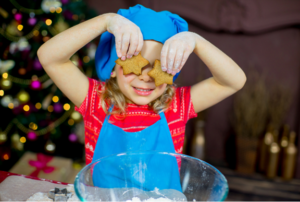
Cooking together boosts confidence, language development, and willingness to try new foods because kids feel ownership.
A few ideas:
- Plastic or nylon kid-safe knives
- A mini whisk or spatula
- A child-friendly cutting board
- A step stool for “kitchen helpers”
Why it matters: Kids who get hands-on with food—even just washing veggies—tend to feel safer and more curious at mealtimes.
- Picture Books That Normalize Eating, Bodies & Food Variety
Books help kids rehearse ideas about food without any pressure to eat.
Great options:
- We’re Going to the Farmers’ Market
- Stone Soup
- Rah, Rah, Radishes!
- Too Pickley!
Why it matters: Stories build familiarity, which reduces anxiety and picky eating.
- Food-Themed Pretend Play Sets
Pretend food sets allow kids to explore colours, textures, shapes, and imaginative “tasting” through play—an essential step in picky eating support.
Ideas:
- Wooden fruit & veggie chopping sets
- A pretend grocery store
- Play kitchens with pots and pans
- Felt food sets (great for sensory-sensitive kids)
Why it matters: Pretend exposure is real exposure. This type of play counts as food learning.
- Sensory Food Play Kits
Non-eating food play helps children explore without pressure.
Try:
- Dried pasta or rice sensory bins
- Silicone muffin molds for “food sorting”
- Play dough kits with food stamps
- Washable paint + veggie stamping (celery, apples, potatoes!)
Why it matters: Sensory play helps hesitant eaters become more comfortable with food… and often more willing to taste over time.
- Garden or Growing Kits
A wonderful winter-to-spring project!
Simple choices:
- Microgreen kits
- Herb garden starter pots
- “Regrow your romaine” jars
- Window-sill veggie kits
Why it matters: Kids LOVE eating what they grow. It teaches patience, science, and connection to food.
- Kid-Friendly Cookbooks & Recipe Cards
Perfect for weekend cooking or “helper night” traditions.
Look for:
- Visual step-by-step recipes
- Simple ingredients
- Colourful photos
- Lots of opportunities for mixing, pouring, and decorating
Why it matters: Kids learn cooking as a skill, not an obligation. This builds confidence and autonomy.
- Experience Gifts That Involve Food Exploration
Not eating — exploring.
Ideas:
- A trip to a winter farmers’ market
- A baking day with a grandparent
- A family soup-making tradition
- A “taste the rainbow” produce adventure
Why it matters: Food experiences create positive memories. These shape how kids view food for years to come.
Food plays a big role in December — and it doesn’t need to be stressful. You can use this season to nurture curiosity, connection, and confidence at the table.
Whether it’s a mini spatula, a pretend grocery store, or planting basil on a snowy day, these gifts help build the foundation of a lifelong healthy relationship with food.
——————————————————————————————————————————
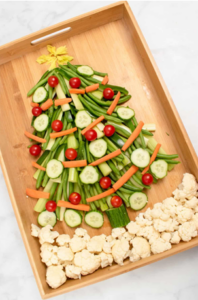
Recipe of the Month: Christmas Tree Veggie Tray
Any way to make veggies more fun is what I am all about! These cute veggie trays don’t take much to assemble and your kiddo might like to even ‘decorate’ the tree. Great for potlucks, family gatherings or a fun snack (made on a smaller scale.
Recipe:
- 1 head celery
- ½ pound green beans or use pea pods
- 1 green pepper
- 2 carrots
- 1 red bell pepper
- 1 cucumber
- 10-20 cherry tomatoes
- 1 head cauliflower
- 1 handful bow-tie pasta or other interesting pasta shape for the star
- Optional: your favourite veggie dips: hummus, ranch, herby cream cheese etc.
Directions
- Prep the veggies:
- Wash and dry all produce.
- Peel the carrots and slice into thin sticks.
- Trim the ends off the green beans.
- Cut the celery into narrow sticks.
- Slice the peppers into thin strips.
- Slice the cucumber or zucchini into thin rounds, leaving a 2-inch section uncut. Halve that section to create the tree trunk.
- Break the cauliflower into small, bite-sized florets.
- Build the tree base:
On a large platter, begin forming the shape of a pine tree. Starting from the bottom and working upward, layer the celery sticks, green beans, pea pods, and green pepper slices to create the tree’s “branches.”
- Add the garland:
Drape thin carrot sticks and/or strips of red pepper across the tree to look like a garland.
- Decorate the tree:
Use the cherry tomatoes and the cucumber/zucchini rounds as ornaments throughout the tree.
- Place the star & trunk:
Position the pasta star at the top of the tree, then add the cucumber (or zucchini) trunk at the bottom.
- Finish with snow:
Arrange the cauliflower florets along the bottom of the platter to look like a snowy base
By Megan Wallace, RD | Pediatric & Family Nutrition
Read more about Megan Wallace on our Daily Nutrition page.
Nutrition Month…

By Megan Wallace, RD | Pediatric & Family Nutrition
Read more about Megan Wallace on our Daily Nutrition page.
When we think about…