
Why Play-Based Learning in Childcare Matters for Edmonton Families
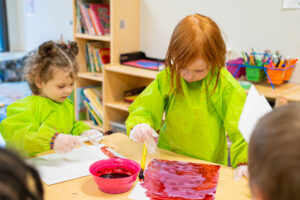
Why Play-Based Learning in Childcare Matters for Edmonton Families
When parents begin searching for the right childcare centre, one of the first questions they ask is, “Will my child actually be learning here?”
It’s a fair question. Families want more than supervision. They want an environment where their child feels safe, supported, and excited to grow.
That is why play-based learning continues to be one of the most valuable approaches in early childhood education.
At Kepler Academy, our Exploratory Education approach combines hands-on discovery, creative play, and educator-guided learning experiences designed to support the whole child. Our curriculum is built around children’s interests, ideas, and developmental needs, helping them grow through meaningful everyday experiences.
What Is Play-Based Learning?
Play-based learning is an educational approach where children build skills through guided play, exploration, creativity, and interaction.
This does not mean children are simply left to play without structure. In a high-quality childcare environment, educators thoughtfully design activities, materials, and experiences that encourage children to problem-solve, communicate, collaborate, and explore new concepts.
For young children, play is not separate from learning. Play is how learning happens.
Whether a child is building a tower, pretending to run a grocery store, painting with new textures, or investigating objects in nature, they are actively developing cognitive, social, emotional, physical, and communication skills all at once.
Why Play-Based Learning Works So Well in Early Childhood
The early years are a time of rapid development. Children are naturally curious, and they learn best when they are engaged.
Play-based learning works because it matches how young children naturally discover the world around them.
Instead of relying on memorization or rigid instruction, this approach invites children to:
- ask questions
- test ideas
- make choices
- build confidence
- explore at their own pace
- learn through movement, creativity, and interaction
This kind of learning helps children become active participants in their own development.
At Kepler Academy, our curriculum includes emergent activities, hands-on creative play, and inter-curricular experiences that support different early learning styles. That makes play-based learning especially effective for meeting children where they are.
1. Play Builds Strong Communication Skills
When children play, they talk.
They describe what they are doing. They ask questions. They express needs, ideas, and emotions. They listen to others and respond.
Even simple activities such as playing with blocks, dressing up, or joining a group game can strengthen vocabulary, comprehension, and conversational skills.
For younger children, play also supports non-verbal communication, turn-taking, and early social understanding. For preschool-aged children, it helps build storytelling, problem-solving language, and confidence in expressing ideas.
These communication skills become an important part of school readiness.
2. Play Supports Social and Emotional Development
One of the biggest benefits of play-based learning is the way it helps children build relationships.
Through play, children learn how to:
- share space and materials
- cooperate with peers
- navigate frustration
- practice empathy
- build independence
- understand routines and expectations
These are not “extra” skills. They are foundational life skills.
A child who learns how to regulate emotions, ask for help, include others, and recover from challenges is developing the tools they will carry into school and beyond.
In a supportive childcare setting, educators help guide these moments so children feel encouraged while learning how to interact with others in healthy ways.
3. Play Encourages Critical Thinking and Problem-Solving
Play is full of decision-making.
How tall can this tower go? What happens if I mix these colours? How can we build a road wide enough for all the toy cars? Why did the water move that way?
These moments may look simple from the outside, but they help children build essential thinking skills.
Play-based learning encourages children to observe, predict, experiment, and adapt. Instead of always being given the answer, they are invited to discover it.
That builds persistence, confidence, and curiosity.
These early problem-solving experiences lay the foundation for later learning in literacy, math, science, and everyday life.
4. Play Helps Children Develop Physically
Movement matters in early learning.
From sensory tables and climbing structures to drawing, painting, and manipulating small objects, play helps children strengthen both gross and fine motor skills.
Young children need opportunities to move their bodies, coordinate their actions, and practice control in ways that feel natural and enjoyable.
This is especially important in the early years, when physical development is closely connected to confidence, independence, and readiness for more advanced tasks later on.
Activities like pouring, cutting, building, jumping, dancing, and outdoor exploration all help children develop physical capability while staying engaged in the learning process.
5. Play Makes Learning Feel Positive
Children are more likely to stay curious when learning feels exciting.
That is one of the biggest strengths of play-based education. It creates positive associations with discovery, effort, and exploration.
When children feel safe to try, make mistakes, and try again, they begin to see themselves as capable learners.
That mindset matters.
Rather than seeing learning as pressure or performance, children begin to view it as something enjoyable and rewarding. This can shape their confidence long before they enter elementary school.
At Kepler Academy, we believe children thrive when their natural desire to explore is encouraged, helping them build a positive attitude toward lifelong learning.
What Edmonton Parents Should Look for in a Play-Based Childcare Centre
Not all play-based environments are the same.
If you are searching for childcare in Edmonton, it helps to look beyond the phrase itself and ask how the approach is actually implemented.
Look for a centre that offers:
- intentional learning experiences, not just unstructured free time
- educators who guide discovery and development
- a curriculum that adapts to children’s interests
- opportunities for sensory play, movement, creativity, and social interaction
- a warm, engaging environment that supports the whole child
Kepler Academy’s programs serve children from 16 weeks to 6 years, as well as out-of-school care for older children, with a curriculum designed to help each child build skills across multiple areas of development.
Final Thoughts
Play-based learning is not about doing less.
It is about learning in the way young children learn best.
When children play, they are building language, relationships, motor skills, independence, confidence, and problem-solving ability all at once. In a high-quality childcare environment, those everyday moments of play become meaningful opportunities for growth.
For Edmonton families looking for more than traditional daycare, play-based learning offers a strong foundation for both early development and long-term success.
At Kepler Academy, we are proud to create learning environments where curiosity is encouraged, creativity is valued, and children are supported as they grow into confident learners.
Looking for a childcare centre in Edmonton that blends care with meaningful early learning? Book a tour with Kepler Academy to learn more about our Exploratory Education approach.
How to Choose the Best ChildCare in Edmonton for Your Child
Choosing childcare is one of the biggest decisions a family can make.
You are not…

By Megan Wallace, RD | Pediatric & Family Nutrition
Read more about Megan Wallace on our Daily Nutrition page.
Nutrition Month…